
Responsible gambling — self-exclusion, limits and help
Tools for responsible gambling: daily limits, self-exclusion, reality checks and the support organisations available in English. How to spot the early signs of addiction, and where to ask for help.
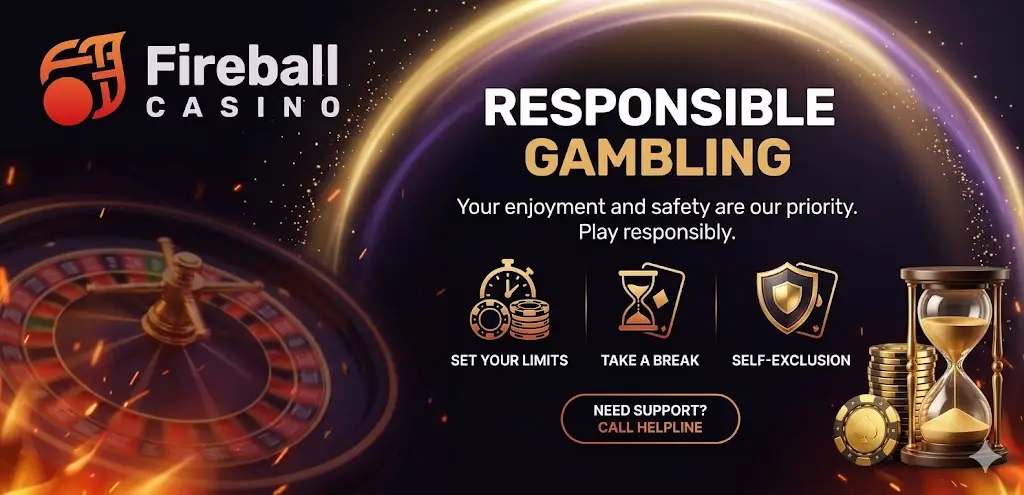
What does responsible gambling mean?
Responsible gambling means treating gambling as entertainment, not as an income source. You only stake amounts whose loss would not cause financial or emotional problems. Gambling can be addictive, so control is fundamental — anyone who plays should understand and actively use the responsible-play tools provided by the platform.
Self-control tools on Fireball Casino
For responsible gambling, the Fireball platform offers a comprehensive toolset accessible directly from your account settings. These tools reinforce your own control and help head off problem-player behaviour at an early stage, before it becomes hard to manage.
- Daily/weekly/monthly deposit limits: Set a maximum deposit cap with a single click.
- Loss limits: Maximum loss over a given window — once hit, the account is locked.
- Session-time limit: Maximum time per session, with automatic logout.
- Reality check: Periodic reminders showing elapsed time and amount spent.
- Wager limit: Maximum amount per spin or per bet.
- Self-exclusion: Temporary (24 hours, 1 week, 1 month, 6 months) or permanent account lock.
Early signs of gambling addiction
Gambling addiction develops gradually and is often hard to recognise in yourself. The warning signs below are worth watching for — if you notice any of them in your own behaviour, it is worth speaking to a specialist.
- Wagering increasing amounts to reach the same level of excitement.
- Feeling restless or irritable when you cannot play.
- Lying to family or friends about the time and money you spend gambling.
- Borrowing money or taking loans to fund gambling.
- Trying at all costs to win back lost money (chasing losses).
- Damage to your work, family life or health caused by gambling.
Where to get help — local and international organisations
If you feel gambling is causing problems, you are not alone. A number of organisations offer free, anonymous support, including in English. Asking for help early is the key to keeping the problem from getting worse.
Recommended organisations
- BeGambleAware.org — International organisation offering a free helpline, online chat and self-help resources.
- Gamblers Anonymous — In-person and online support groups available in many countries.
- Malta Gaming Authority — At mga.org.mt you can find international standards for player protection and self-exclusion support.
- Local national helplines — Most EU countries operate a free national helpline for problem-gambling support.
Protect minors
Gambling is only permitted for those aged 18 or over. If a child or minor lives in or visits your household, use parental-control software (Google Family Link, Apple Screen Time, NetNanny) to block gambling sites. The platform also enforces strict age verification and closes accounts belonging to anyone under 18 as soon as that is detected.
Ready to play?
Open your account at Fireball Casino and claim the welcome bonus. Instant payouts, no KYC, HUF and crypto supported. ⚡
⚡ Open Account